Is Your Pet Bored Signs They Need More Enrichment for Every Species
A bored pet is not always a lazy pet. Sometimes the dog chewing the baseboard, the cat knocking cups off the counter, or the rabbit rattling cage bars is asking for a life with more choice, movement, and problem-solving.
Enrichment gives animals healthy ways to use their bodies and brains. It does not have to be expensive or complicated. The best enrichment matches the species, the individual, and the behavior they were built to do.
Signs your pet may need more enrichment
Boredom can look different depending on the animal. Some pets get loud and destructive. Others shut down and sleep more than usual. Watch for patterns, especially when the behavior happens at the same time each day or after long stretches with little activity.
Common signs include:
Destructive behavior
Chewing, digging, shredding, scratching, or knocking things over can be an outlet for unused energy.
Repetitive actions
Pacing, circling, bar biting, over-grooming, or glass surfing can signal stress or lack of stimulation.
Attention-seeking that feels intense
Constant barking, meowing, screaming, nudging, or pawing may mean the pet needs more structured activity.
Loss of interest
A pet that stops exploring, playing, or engaging may be under-stimulated, stressed, or unwell.
Food obsession or rushing meals
Many animals enjoy working for food. A bowl that is emptied in seconds gives the brain very little to do.
Sudden behavior changes can also point to pain or illness. If a new behavior appears quickly, gets worse, or comes with appetite, mobility, breathing, or bathroom changes, schedule a veterinary check. Enrichment helps, but it should not replace medical care.
Dogs need sniffing, chewing, movement, and choices
Dogs often need more than a walk around the block. Physical exercise matters, but mental work can be just as tiring in a good way.
Try these dog-friendly activities:
Sniff walks
Let the dog set the pace for part of the walk. Sniffing gives dogs information and burns mental energy.
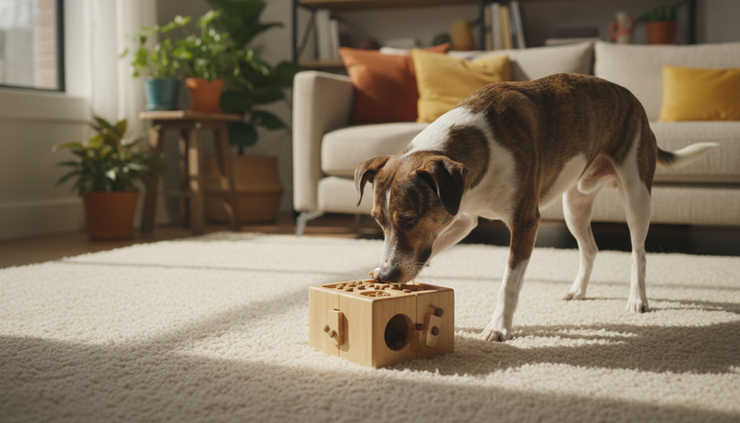
Food puzzles and scatter feeding
Use a puzzle toy, snuffle mat, or scatter kibble in safe grass or a clean towel.
Chewing
Offer safe chews matched to your dog’s size and chewing style. Supervise new chews.
Training games
Practice short sessions with cues like touch, find it, stay, or spin. Keep it fun and reward-based.
Scent games
Hide treats in easy spots, then make the search harder as your dog learns.
A good goal is not to exhaust a dog into collapse. It is to give them a predictable mix of movement, sniffing, rest, and problem-solving.

Cats need hunting games, climbing, scratching, and hiding
Cats are built for short bursts of intense activity. A cat who seems “bad” at night may simply be under-stimulated during the day.
The best cat enrichment often follows a natural hunting pattern: stalk, chase, pounce, catch, eat, groom, rest.
Try these ideas:
Wand toy sessions
Move the toy like prey. Let the cat catch it often, then end with a small meal or treat.
Vertical space
Cat trees, shelves, window perches, and cleared furniture give cats more territory.
Scratching options
Offer both vertical and horizontal scratchers. Try cardboard, sisal, and wood textures.
Puzzle feeders
Make meals last longer with treat balls, lick mats, or simple DIY boxes with holes.
Safe hiding spots
Boxes, tunnels, and covered beds help cats feel secure.
Skip laser-only play unless you finish with a physical toy the cat can catch. Constant chasing with no capture can frustrate some cats.
Birds need foraging, flight, sound, and social time
Birds are intelligent, active animals. Many species spend much of their day searching for food, moving, vocalizing, and interacting. A plain cage with a full bowl does not offer enough variety.
Good bird enrichment includes:
Foraging
Wrap food in paper, tuck greens into safe clips, or use species-appropriate foraging toys.
Perch variety
Offer different safe diameters and textures to support foot health.
Shredding
Many birds enjoy destroying safe paper, palm leaf, cardboard, or untreated wood.
Training
Target training and step-up practice can build trust and reduce stress.
Supervised out-of-cage time
Safe flight or climbing time helps birds move naturally.
Birds are sensitive to household hazards. Avoid fumes from overheated nonstick cookware, scented candles, aerosols, and smoke. Check that toys are made from bird-safe materials and size them correctly to prevent entanglement.
Rabbits and small animals need digging, chewing, tunnels, and foraging
Rabbits, guinea pigs, hamsters, gerbils, mice, rats, chinchillas, and ferrets all need species-appropriate enrichment. They are often small, but their needs are not.
For rabbits, try:
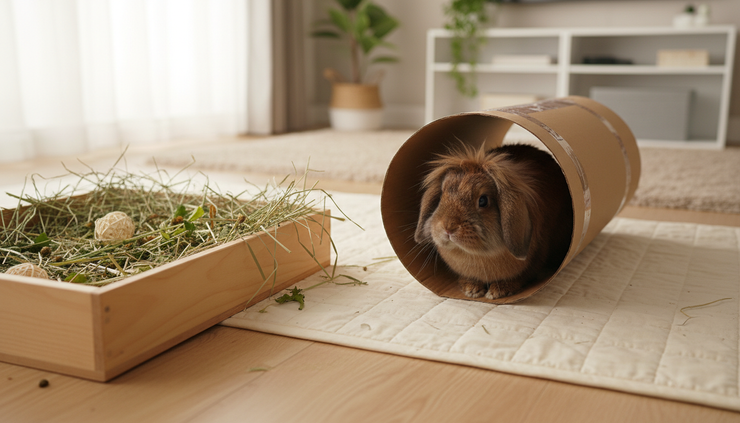
Hay-based foraging
Hide herbs or pellets in piles of hay.
Dig boxes
Use shredded paper, safe soil, or fabric strips, depending on what your rabbit tolerates safely.
Tunnels and hideouts
Rabbits like to move between cover and open space.
Chew items
Untreated willow, apple wood, cardboard, and hay toys can help satisfy chewing needs.
For guinea pigs and other small animals, focus on safe floor time, tunnels, hides, chew items, and food scattered in bedding or hay. Rats often enjoy climbing, pea fishing in shallow water, puzzle toys, and training. Hamsters and gerbils need deep bedding for burrowing, not just a thin layer on the cage floor.
Chinchillas need dust baths and safe chewing. Ferrets need supervised play, tunnels, boxes, and chances to chase and carry toys. Always check materials, spacing, and toy size, since small animals can get trapped or ingest unsafe pieces.
Reptiles need habitat complexity, heat choices, and natural behaviors
Reptile enrichment looks different from mammal or bird enrichment. It centers on a well-designed habitat that lets the animal choose where to rest, hide, bask, climb, soak, dig, and explore.
Useful reptile enrichment can include:
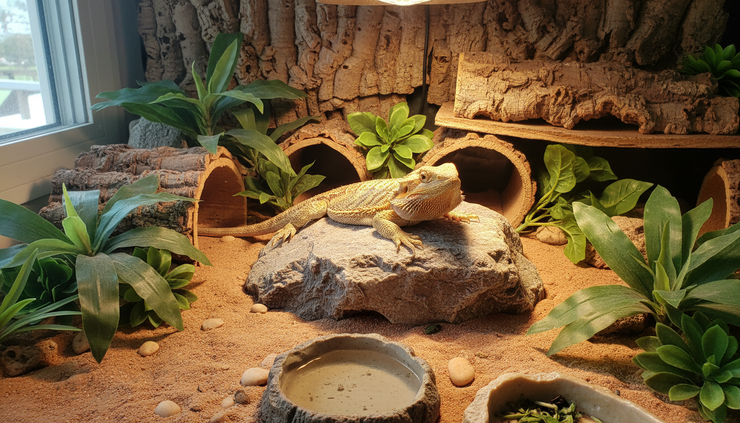
Temperature gradients
A warm side, cool side, and proper basking area let reptiles regulate their body temperature.
Hides in multiple zones
Place hides on both warm and cool sides so the reptile can feel secure while choosing temperature.
Climbing or digging options
Use branches, rocks, cork bark, plants, or deeper substrate when appropriate for the species.
Feeding enrichment
Tong feeding, scent trails, puzzle-style feeders, or spreading greens can encourage natural movement.
Visual barriers
Plants and décor help reduce stress by making the habitat feel less exposed.
Research the exact species. A bearded dragon, leopard gecko, ball python, corn snake, crested gecko, and aquatic turtle all need different setups. Safe enrichment starts with correct heat, humidity, lighting, diet, and enclosure size.
How to add enrichment without overwhelming your pet
Start small. Add one new activity at a time and watch how your pet responds. A relaxed, curious pet may sniff, explore, play, chew, forage, or return later. A stressed pet may freeze, hide, pant, lunge, vocalize sharply, or avoid the item.
Rotate toys instead of leaving everything out all the time. Keep favorite comfort items available, then swap novelty items every few days.
A simple weekly plan might include:
Species | Easy enrichment to add this week |
Dog | One sniff walk, one frozen food toy, two short training games |
Cat | Daily wand play, a box tunnel, meals in a puzzle feeder |
Bird | Paper-wrapped treats, perch change, short target training |
Rabbit | Hay forage box, cardboard tunnel, safe chew bundle |
Reptile | New hide placement, climbing branch, feeding variation |
Small animal | Deeper bedding, scattered food, extra tunnels or hides |
The best test is behavior. A well-enriched pet usually rests better, explores more calmly, shows fewer stress behaviors, and engages more willingly with people and their environment.
Boredom is not a character flaw. It is information. When pets get safe ways to act like their species, dogs sniff, cats stalk, birds forage, rabbits dig, reptiles choose, and small animals explore. Start with one change today, keep it safe, and let your pet show you what works.
Did you find this blog helpful?
Yes
No


Comments