Choosing the Right Pet Caregiver for Your Furry Friend
Updated: 7 hours ago
Start with What Your Pet Actually Needs
Before you compare caregivers, get clear on the kind of care your pet needs. A healthy adult cat who likes quiet visits may need something very different from a senior dog with medication, mobility issues, and separation anxiety.
Think through the daily routine first:
Feeding times and portion sizes
Walks, playtime, and bathroom breaks
Medication or supplements
Crate, litter box, or sleeping routines
Known fears, triggers, or behavior quirks
Vet information and emergency contacts
Be honest about your pet’s personality. If your dog pulls hard on walks, say so. If your cat hides from strangers, that matters. If your bird gets stressed by loud noises, it’s part of the care plan.
A good caregiver should welcome this detail. They shouldn’t brush it off or act like every pet is the same. The more specific you are, the easier it is to spot someone who’s a real match.
Reliability is the First Thing to Check
A pet caregiver can be kind and experienced, but if they’re not dependable, that’s a problem. Pets run on routine. Missed visits, late feedings, or unclear plans can create stress quickly.
Reliability shows up before the job even starts. Watch how the person handles the early steps.
Do they respond when they say they will? Do they show up on time for the meet and greet? Do they ask useful questions? Do they confirm details without being reminded?
Those small clues matter.
Look for Proof, Not Just Promises
Anyone can say, “I’m reliable.” You’re looking for signs that back it up.
Ask for:
References from recent pet care clients
A clear schedule for visits or overnight stays
A backup plan in case of illness, car trouble, or bad weather
Written confirmation of dates, times, rates, and responsibilities
Comfort with keys, alarm systems, and home access instructions
If the caregiver gets defensive about reasonable questions, pay attention. A professional or mature caregiver understands that trust has to be earned.
Ask Scenario-Based Questions
Scenario questions are helpful because they show how someone thinks under pressure.
Try asking:
“What would you do if my dog refused to eat dinner?”
“What if you arrived and my cat was hiding?”
“How would you handle being delayed by traffic?”
“What would you do if my pet seemed sick or injured?”
“Who would you contact first in an emergency?”
You’re not looking for perfect answers. You’re looking for calm thinking, common sense, and a willingness to follow your instructions.
Communication Should Feel Easy from the Start
Good communication is one of the biggest stress relievers while you’re away. You don’t want to wonder whether the visit happened or whether your pet seemed okay.
Before booking, talk about exactly how you’ll stay in touch.
Some caregivers send a brief update after each visit. Some include photos. Some only message if there’s an issue. Any of these can work, as long as you agree ahead of time.
The key is clarity.

Set Expectations Before You Leave
Talk through how often you’d like updates and what you want included.
For example:
A quick message after each visit
A photo once a day
Notes about eating, bathroom habits, and mood
Immediate contact for anything unusual
Confirmation when the caregiver arrives and leaves
If you’re someone who feels better with daily details, say that. If you only want contact for problems, say that too.
Clear expectations help both sides. The caregiver knows what you need, and you’re not left guessing.
Notice How They Listen
A strong caregiver won’t just talk. They’ll listen carefully.
They may repeat details back to you, ask follow-up questions, or take notes. Those are good signs. It means they’re treating your pet’s routine as something worth getting right.
Watch for red flags like:
Interrupting or rushing through instructions
Saying “Don’t worry, I’ve got it” without hearing the details
Ignoring your pet’s medical or behavior needs
Giving vague answers about communication
Being hard to reach during the planning stage
If communication feels strained before the stay, it probably won’t feel better when you’re out of town.
Experience Helps, but the Right Kind Matters Most
Experience doesn’t always mean someone has cared for pets for decades. What matters is whether their background fits your pet’s needs.
A caregiver who’s great with low-maintenance cats may not be the best match for a reactive dog. Someone who grew up with dogs may still need guidance with medication schedules or senior pet care.
Match Their Background to Your Pet
Ask about pets similar to yours.
If you have a puppy, ask about house training, chewing, and safe play. If you have a senior cat, ask about medication, appetite changes, and mobility support. If you have multiple pets, ask how they manage routines without mixing food, meds, or personalities.
Useful questions include:
“What kinds of pets have you cared for most often?”
“Have you cared for pets with medical needs?”
“Are you comfortable giving medication?”
“How do you handle pets who are shy, anxious, or slow to warm up?”
“Have you cared for multiple pets in one home?”
“What would make you say a job isn’t the right fit?”
That last question can tell you a lot. A thoughtful caregiver knows their limits. That’s not a weakness. It’s a sign of responsibility.
Check for Practical Skills
Depending on your pet, experience may include:
Reading basic body language
Walking dogs safely
Separating pets during meals
Cleaning litter boxes or accidents properly
Giving pills, drops, or injections as directed
Handling nervous pets without forcing contact
Knowing when to call a vet
For medical questions, your veterinarian should always be the main source of guidance. A caregiver should follow your vet’s instructions, not invent their own plan.
Compassion is Easy to Feel When You Know What to Watch For
Compassion sounds soft, but it’s one of the most practical traits a caregiver can have. Pets can’t explain what they need. They rely on people to notice discomfort, fear, excitement, and routine changes.
A compassionate caregiver pays attention.
They don’t yank a scared dog toward something overwhelming. They don’t drag a hiding cat out from under the bed for a photo. They don’t call a pet “bad” for acting nervous in an unfamiliar situation.
They adjust, gently.

Watch the Meet and Greet
A meet and greet is one of the best ways to judge compassion. Pay attention to how the caregiver interacts with your pet.
Good signs include:
Letting your pet approach first
Speaking calmly
Asking before offering treats
Respecting nervous body language
Getting down to a pet’s level when appropriate
Showing interest in your pet’s likes and dislikes
Compassion doesn’t always look like instant cuddles. Some pets don’t want that. Often, the kindest thing a caregiver can do is give space.
Trust Your Pet, but Use Context
Your pet’s reaction matters, but it’s not the only factor. Some pets love everyone. Others bark, hide, or act unsure with any new person.
Look at the caregiver’s response. Do they stay patient? Do they avoid taking it personally? Do they ask what usually helps?
That reaction tells you more than whether your pet becomes best friends in five minutes.
Interview Potential Caregivers Like It Matters, Because It Does
An interview doesn’t need to feel formal. Think of it as a practical conversation. You’re deciding whether this person can follow your pet’s routine, respect your home, and handle the unexpected.
Set aside enough time so you’re not rushing. If possible, do the interview where the care will happen. That lets the caregiver see food storage, leash setup, litter boxes, sleeping areas, and anything else they’ll need.
Questions to Ask Before Hiring
Here are strong questions that open up real conversation:
“What does a typical visit look like with you?”
“How do you handle last-minute schedule changes?”
“What’s your backup plan if you can’t make it?”
“How do you keep track of feeding, walks, and medication?”
“What updates will you send, and when?”
“Are you comfortable with my pet’s specific needs?”
“What experience do you have with pets like mine?”
“How would you handle an emergency?”
“Can you provide references?”
“What information do you need from me before I leave?”
Listen for specific answers. “I’ll send a photo and a short note after each evening visit” is stronger than “I’m great at updates.”
Share the Hard Stuff Too
Don’t hide behavior issues because you’re worried the caregiver will say no. Surprises create risk.
Be clear if your pet:
Guards food or toys
Has bitten or scratched before
Tries to escape
Pulls hard on leash
Gets stressed around other animals
Needs medication at exact times
Has accidents when anxious
The right caregiver would rather know upfront. If they’re not comfortable, it’s better to find out before you hand over the keys.
Compare Your Options Without Rushing
If you’re looking online, through referrals, or on a pet sitting marketplace such as Rover, it can be tempting to choose quickly based on availability. Try to slow down enough to compare the important things.
A caregiver with the lowest rate isn’t always the best fit. The person with the most glowing personality may not have the right experience. A neighbor may be convenient but not confident with medication or emergency decisions.
Use a simple comparison like this:
Factor | What to look for | Warning signs |
Reliability | On-time replies, clear schedule, backup plan | Vague availability, missed calls, no plan |
Communication | Update routine, direct answers, good listening | Hard to reach, unclear expectations |
Experience | Background with similar pets and needs | Overconfidence, no relevant examples |
Compassion | Patient, gentle, respectful of boundaries | Forces interaction, dismisses stress signals |
You don’t need a perfect person. You need a trustworthy person who fits your pet.
Prepare Your Caregiver for Success
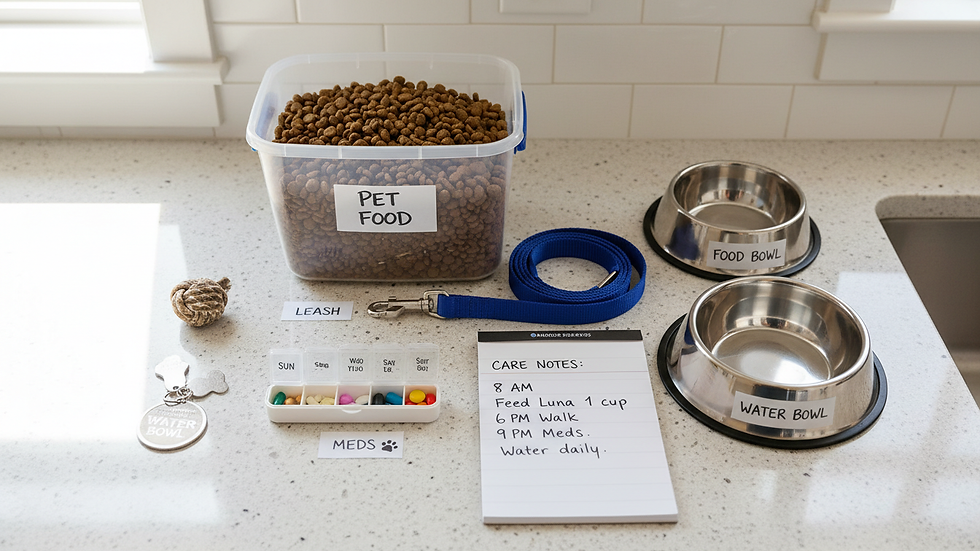
Even the best caregiver needs clear instructions. A written care guide is one of the easiest ways to prevent confusion.
Include:
Your travel dates and return time
Feeding instructions with exact amounts
Medication instructions, if any
Walk or play routines
Favorite hiding spots
Behavior notes
Cleaning supplies location
Vet contact information
Emergency contact
Home access instructions
What to do if you’re unreachable
Leave supplies where they’re easy to find. Label food, medicine, leashes, litter, and treats if needed. If your pet has a strict routine, write it in order by time of day.
Before you leave, do a quick walkthrough. Show where everything is. Let the caregiver ask questions. A little preparation can make the whole experience smoother.
FAQ
How Far in Advance Should I Book a Pet Caregiver?
For holidays, school breaks, and busy travel seasons, book as early as you can. For regular weekends, give yourself enough time to interview, check references, and schedule a meet and greet without pressure.
Should I Choose In-Home Care or Boarding?
Base it on your pet’s comfort and needs. Some pets do better staying in their own home with visits or overnight care. Others may enjoy a caregiver’s home if they’re social and adaptable. Think about stress, safety, routine, and medical needs.
What If My Pet Doesn’t Warm Up During the Meet and Greet?
That’s okay, especially for shy pets. Watch how the caregiver responds. Patience, calm body language, and respect for space are good signs. A forced interaction is not.
Do I Need to Leave Emergency Permission in Writing?
Yes, it’s smart to leave written instructions for emergencies. Include your vet’s information, your preferred emergency clinic, an emergency contact, and how you want urgent decisions handled if you can’t be reached.
What’s the Biggest Red Flag When Choosing a Caregiver?
The biggest red flag is dismissiveness. If someone brushes off your instructions, your pet’s needs, or your concerns, keep looking. A good caregiver takes the details seriously.
Choose the Person Who Makes You Feel Prepared
The right pet caregiver doesn’t just “like animals.” They show up on time, communicate clearly, understand your pet’s needs, and treat your animal with patience and care.
Take the time to ask questions. Watch how they interact with your pet. Share the routines, quirks, and concerns that matter. When reliability, communication, experience, and compassion line up, leaving home gets a lot easier.
Your pet deserves steady, thoughtful care. And you deserve to travel knowing they’re in good hands.


Comments